
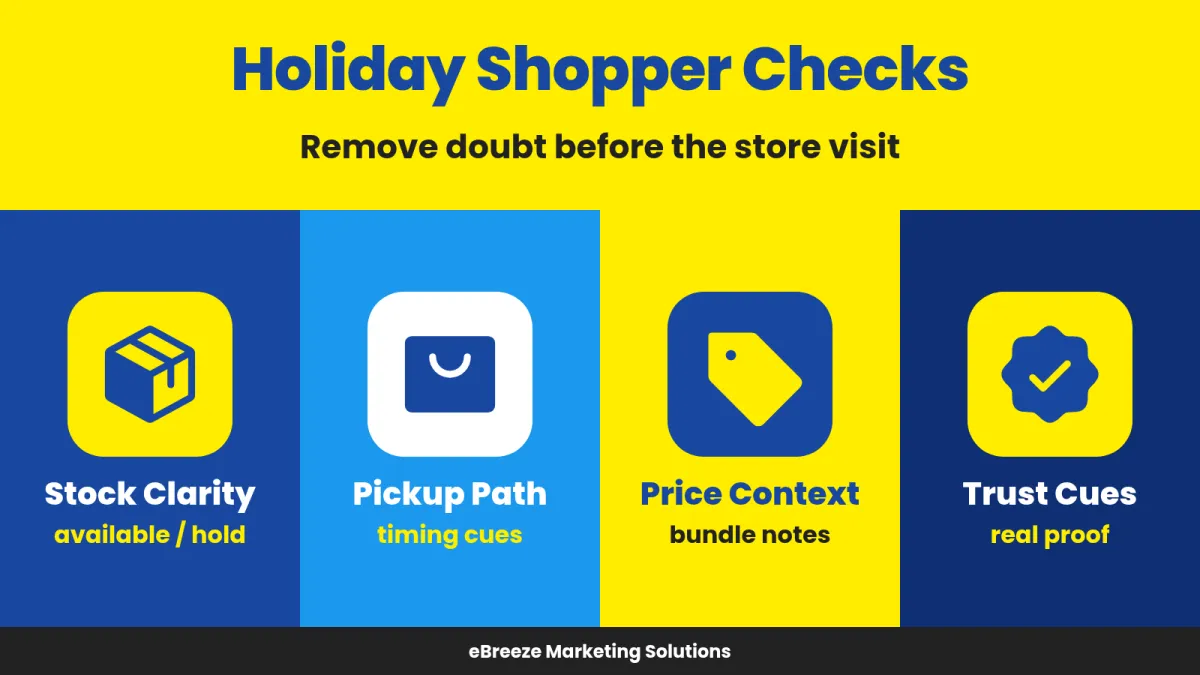
Cautious Holiday Shoppers Need Clearer Store Pages
Introduction
It's late September and the holiday browser tabs are already open. Someone who bought from you last year — or almost did — is looking at the toy, the sweater, the gift set, or pickup. For Local Retailers, the expensive miss is not only a stranger from Google. It is a quiet past shopper you never texted again. Then they click your store page… and the reply dies.
The stake is simple. When you restart that chat, your site has to clear doubt faster than the next store in the results.
Past buyers already know your parking, returns, and staff. Stay quiet until Black Friday ads talk first, and that head start is wasted.
Cautious holiday research starts before the phone rings and before the floor can save the sale.
Clearer stock, pickup, price, and trust cues protect the next click after you reopen the conversation.
The Comparison Starts Before the Door Opens
Retail Brew reported on August 3, 2026, that 35.8% of surveyed holiday shoppers planned to buy in physical stores. The same coverage also flagged tight budgets, stockouts, hidden fees, checkout friction, and low trust in AI shopping content. Wanting a local store is not enough. If the page makes the trip feel shaky, the reply you earned dies on the next click.
Fixing the website does not replace reactivation. It puts stock, pickup, price, and “what do I do next” where shoppers can see them — the plain job of local retailer website enhancement.
Reactivation starts the thread. The page has to finish the next step without forcing a call for basics.
Wanting a local store is not the same as trusting the visit. Unclear pages erase the goodwill you just reopened.
Clear store pages turn “maybe I should stop in” into a next step they can take.

Holiday comparison often starts before a shopper decides whether the trip is worth it.
Stock Clarity Beats Pretty Seasonal Copy
Seasonal copy can set the mood. A cautious shopper answering your message usually wants less cheer and more facts: Is it there? Can you hold it? Does it change fast? Should they call first?
Split the labels. Use “in store today,” “limited sizes,” “ask before visiting,” and “available for pickup.” One cheerful shop-now button is not a plan.
The page does not need perfect inventory. It needs honest labels a shopper can use — so the reply survives the click.
If they ask about a product in chat or on the site, point them to a real answer — or a real person. Do not pretend stock is exact when it is not.
Hold language and pickup timing belong near the product, not under a pile of seasonal fluff.
Honest labels beat pretty copy when a quiet buyer decides whether your message was worth opening.
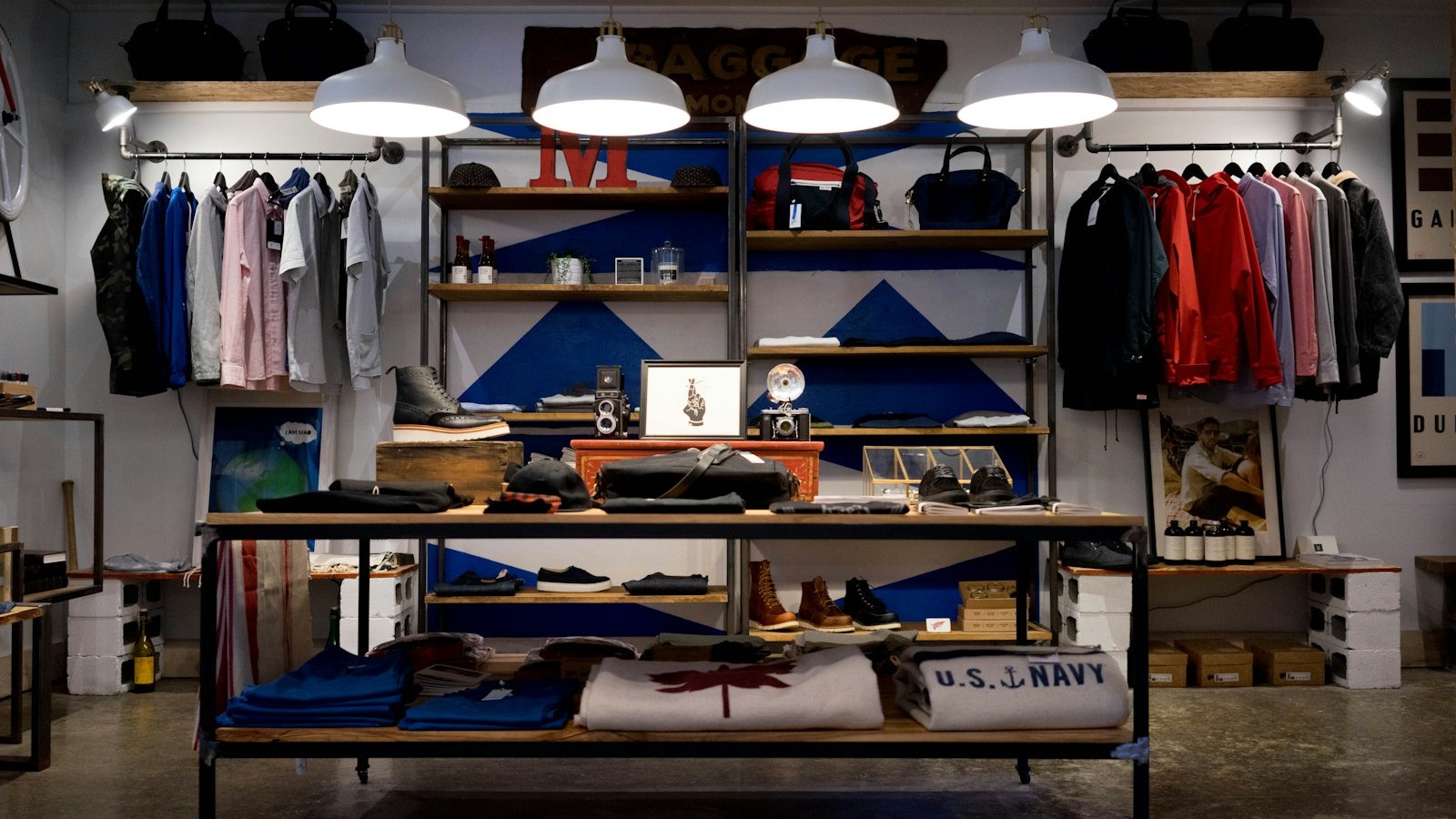
Availability language can be honest without leaving shoppers guessing.
Price Doubt Needs a Real Answer
A price-sensitive shopper may not need a discount. They may need the range, the bundle, pickup savings, return basics, or why the local option is different. Retail Brew’s holiday coverage cited limited budgets and price-hike sensitivity. Vague “value” talk falls flat once your message lands.
You do not have to be the cheapest store in town. You have to answer the price question before doubt does — especially for someone who already bought once.
Put plain pricing context near the decision: ranges, gift-bundle notes, local pickup details, and exchange basics.
Help them compare without a discount-first blast.
Keep service differences visible so the buyer can justify the store visit without guessing.
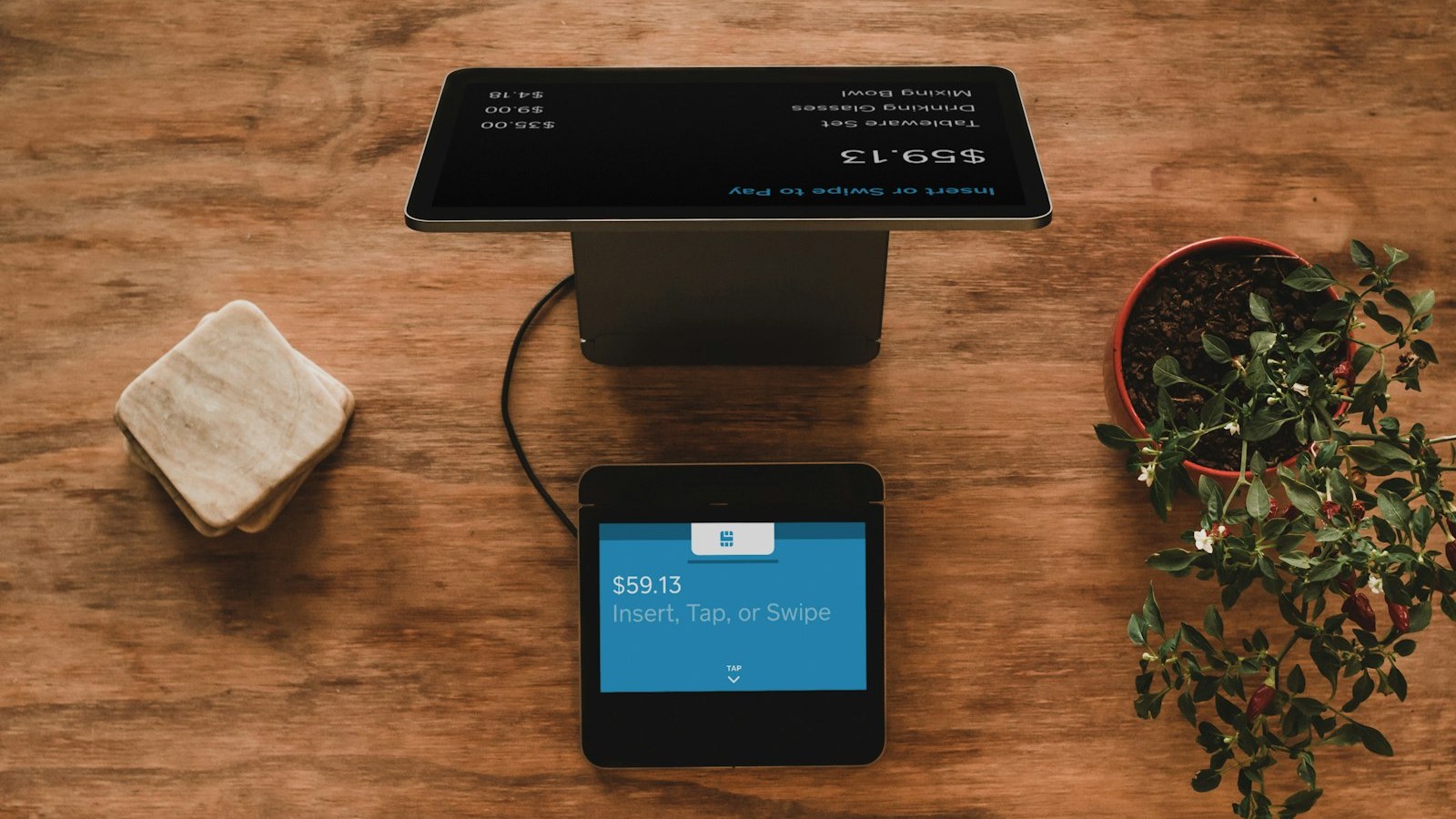
Price context helps cautious shoppers compare without forcing a discount-first message.
The Visit Button Has to Earn the Trip
Store hours, parking notes, pickup timing, gift wrapping, and staff help should be easy to find on a phone. The shopper may be deciding from a car or the couch — often right after your message lands.
A visit button works when the trip feels real, not when the button shouts louder. Match the ask to what they need: ask about a product, request a hold, check if it is in, get directions, or plan a visit. “Contact us” is a junk drawer.
When holds, product questions, emails, forms, and social replies scatter, one inbox helps the team see what needs a real reply — before the inbox turns into a scavenger hunt.
One clear ask beats five links fighting each other after the message lands.
Pickup and hold paths protect the reply. They are not a stand-in for messaging the quiet list again.
Trust Cues Matter More When AI Clouds the Shelf
Shoppers are used to AI in shopping. Retail Brew also reported caution about AI-made recommendations, influenced reviews, and product imagery. On the page they hit next, use real product photos, plain review context, staff know-how, and stock notes that sound like a store a person actually runs.
Trust cues do not need a show. They need to be specific enough that a past buyer believes you know your shelves.
Retail TouchPoints reported on August 18, 2026, that independent retailers can move fast on trends and lean on local curation. That edge needs to show up on the page.
Real photos and local review context beat generic AI-flavored shelf talk.
Trust on the page is how the next click stays with you instead of the louder feed.
Measure the Questions Shoppers Keep Asking
Track the same product questions, hold requests, pickup confusion, direction taps, and calls that start with “Do you still have…” Those are page updates wearing work shoes. They are also the gaps that kill a reply after the message lands.
NRF’s August 10, 2026, Retail Monitor said July retail sales kept growing while households stayed budget conscious. Shoppers may still spend. They just compare more carefully. Use review themes, reputation signals, and inbox notes to update pages before peak weeks.
The best website fixes often come from the questions staff are tired of answering by Thursday.
Update pages from reply themes before peak so those messages land on clearer next steps.
Budget-conscious shoppers still buy. They punish unclear pages.

Repeated shopper questions are useful inputs for the next website update.
FAQ
What should a local retailer fix before reopening holiday conversations?
Start with details that cut hesitation after the message lands: stock cues, pickup timing, price context, exchange basics, hours, parking, directions, and a clear way to ask a product question.
How can a small store show product availability without promising exact inventory?
Use honest language such as “limited sizes,” “call or message before visiting,” “hold requests available,” or “updated daily when possible.” Aim for useful confidence, not an inventory promise you cannot keep.
Should holiday shoppers go to product pages, pickup options, or the store location page?
Send them to the page that matches what they need. Product questions belong near product detail. Ready buyers need pickup or hold options. Visit planners need hours, parking, directions, and store-specific help.
What website details make someone more likely to reply or visit after you reopen the conversation?
Current product cues, price context, real photos, local review snippets, pickup timing, parking notes, staff help, and one-tap directions.
How should a retailer address price concerns without leading with discounts?
Explain value in plain words: ranges, bundle notes, what is included, pickup savings, exchange basics, and why local help is different. Do not make savings claims you cannot back up.
Which shopper questions should become website updates before the holiday rush?
Repeated questions about stock, sizing, holds, pickup, parking, returns, gift wrap, and availability. Those gaps kill the reply.
CTA
Cautious holiday shoppers are not asking you to become a giant online shop. They are asking you to reopen the conversation — and make the next step clear enough that a visit, pickup, hold, or product question is worth a few minutes. See how eBreeze helps Local Retailers do that.
